Regula Artificum
Rule of the Artificers
| Region | Rain Wild |
|---|
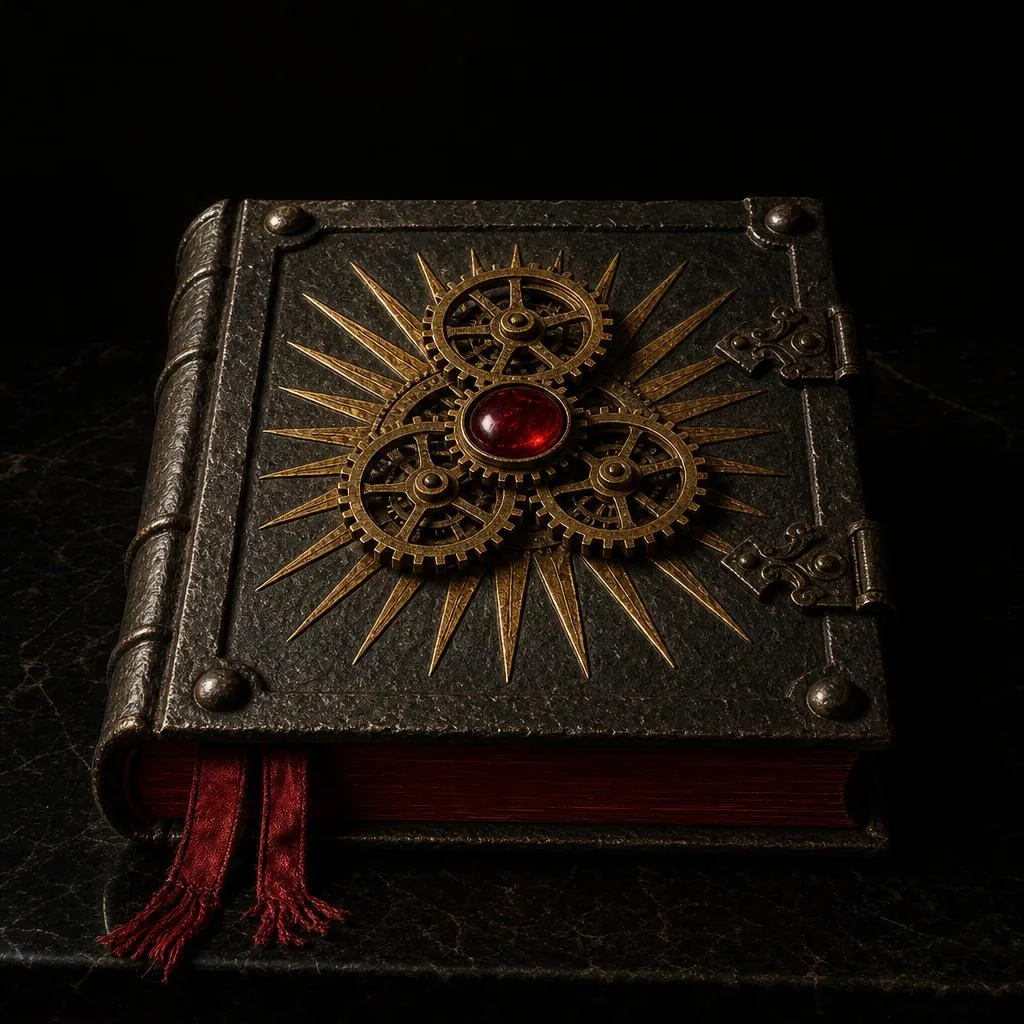
(REH-goo-lah ar-TIF-ih-koom) — "the Rule of the Artificers."
The book that holds the Iron Hand's activation liturgy. Its keeping passed into Ael-Brynn's oath-custody long ago, and Aerlaith gave it to Garth there (Jan 8, 1017) in exchange for his help restoring the dragons. It is more than a liturgy: alongside the rites and prayers it holds the order's teaching, the tests of the four Words, and the rule its Artificers lived by.
The Four Words
From Garth's study of the Regula.
Qui se regit, ferrum regit. (kwee seh REG-it, FER-rum REG-it)
Who rules himself rules iron.
The Regula holds more than the rite that woke the Hand. Its later pages are the liturgies of the four Words struck into the gauntlet's inner plate: fac, refice, frange, perfer — make, mend, break, endure. Each Word wakes more of the Hand, and each is earned by a test.
Its teaching is the same at every stage. The Hand makes its bearer stronger, so the Artifex must master himself first. Every Word is learned twice: first in the self, then in the world. The Hand will do for the battlefield only what its bearer has already proved to himself.
The orthodox order
The sealing words run make, mend, break, endure. The Regula taught them in the opposite order: a novice learned endurance first and making last, because making was the master's art.
- Perfer — endure
- Frange — break
- Refice — mend
- Fac — make
A warning in the margin. The Regula records Artificers rushed through their training in wartime, made into breakers and menders before they had learned to endure. The order called them the Combusti (kom-BOOS-tee), the Burned. Their arms filled with brands they never chose, and they feared the Hand they carried for the rest of their lives.
How a test was judged
Two judges stood at every test. The seniors of the chapter, living Artificers who had passed it themselves, watched and ruled. A Witness named one of the honored dead makers, and the test held only if the dead assented. As at the Waking, nothing was bound by the living alone.
Every test also cost the candidate something beyond the brand. The Regula is clear that a Word given for free is not given at all.
Perfer — endure
(PER-fer)
Lay your fire on me and I will not pull away.
In the self: pain, fire, and fear. In the world: what the Artifex holds endures.
- The test — the Night of the Anvil. The novice laid his gauntleted arm on the anvil-stone in the shrine's forge fire and kept it there from dusk to dawn. He took the brand; it was not imposed on him.
- The offering. Under his arm he laid the thing he held most of himself in — a family seal, or a token of the life he would have had. The fire took both.
- Judged by the seniors, watching for the flinch, and the dead maker named as Witness, giving assent.
The fire takes what you give, and gives back what is holy.
Frange — break
(FRAN-geh)
Burn the boast out of my hand before it costs the work.
In the self: pride, and the boast. In the world: to break clean what should fall.
- The test — the Breaking of the Piece. The novice brought his finest work and broke it before the seniors: one blow, nothing salvaged, nothing else harmed. In a second trial the seniors set out several works, one of them hiding a fatal flaw; he had to find it, and break only that one.
- The offering. The work itself — the best thing he had ever made.
- Judged by the seniors, on the cleanness of the break and the rightness of the choice, and the dead maker named as Witness, giving assent.
Refice — mend
(REH-fih-keh)
What I cannot mend, I will not pretend to.
In the self: patience, and honesty. In the world: to mend wargear, works, and machine spirits.
- The test — the Unmendable Piece. The seniors gave the novice a broken work that was secretly beyond repair, and let him labor on it as long as he liked. The test was his report: he had to mend what could be mended and say plainly what could not. Any who pretended failed.
- The offering. The claim to be the man who can fix anything.
- Judged by the seniors, who knew from the start that the piece could not be mended, and the dead maker named as Witness, giving assent.
Those who tended machine spirits took a harder form: sit with a dying spirit, mend what remained of it, then grant it the last rite.
Fac — make
(FAHK)
What is broken and should stand, I will raise.
In the self: the self, made whole. In the world: wards, seals, and masterworks.
- The test — the Masterpiece. The journeyman submitted a work of new design. It could never be a copy of an older one.
- The offering. By custom he never kept or used his Masterpiece. It bore his mark, and he could not claim it.
- Judged by the seniors, who judged the work, and the dead maker named as Witness, who had to assent to it. The Regula says the dead know true new work when they see it.
What Garth faces
The order is gone. There are no seniors to judge, no chapter to stand witness, and no living Artificer who has passed a test. The Regula describes the rites as they were kept; it cannot tell Garth how to keep them now. For each Word, Garth will have to decide:
- Who judges him, now that the seniors are gone.
- What deed answers the Word's question in this world.
- What he gives up. Every test in the Regula costs its candidate something beyond the brand. Every test involves sacrifice in both its meanings: to give something up, and to be made holy.
The questions each Word asks:
- Perfer — What do you hold most of yourself in, and would you lay it in the fire?
- Frange — What do you love that should fall?
- Refice — Who must hear the truth about what you cannot mend, and what will telling them cost you?
- Fac — What will you make that is new?
Work through these with your GM. The Regula gives the shape of each test; the answer is Garth's to find.
Pages not yet deciphered
The Words are not the whole book. Its later chapters, still only half read, name two arts every maker of the Collegium learned, whatever his arm:
- Communion — the art of sensing the machine spirits, and of reaching into the paths their minds run along.
- Command — the art of bending a machine spirit to the maker's will. For the Artificer in the field, that means waking the spirit asleep in a salvaged device and directing it in battle.
The rubrics warn that the two are learned slowly, and that a maker who reaches too far into the paths may not come back the same.
See also
- Iron Hand — the relic the Regula wakes
- Imperial Relics — Known Relics index
- Canor Aerlaith — who held the Regula in Ael-Brynn, and the bargain Garth made for it